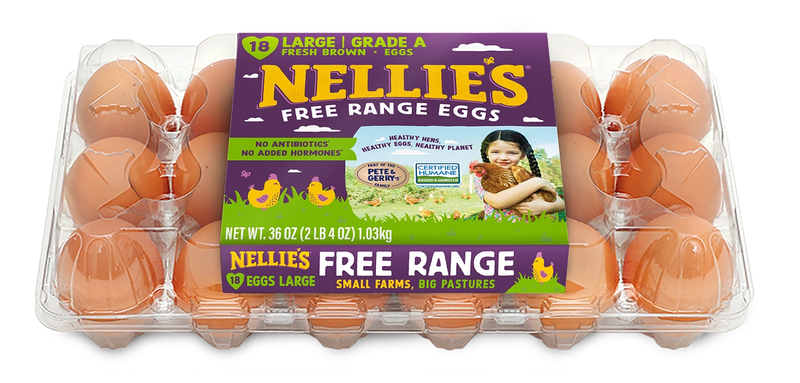
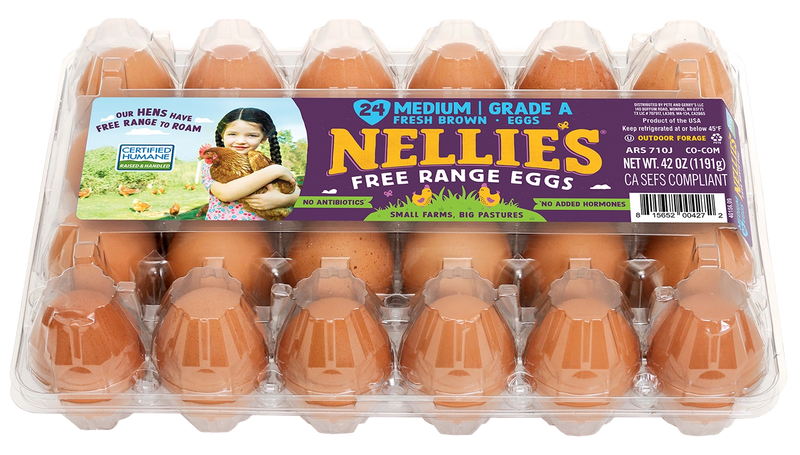
Free Range Eggs

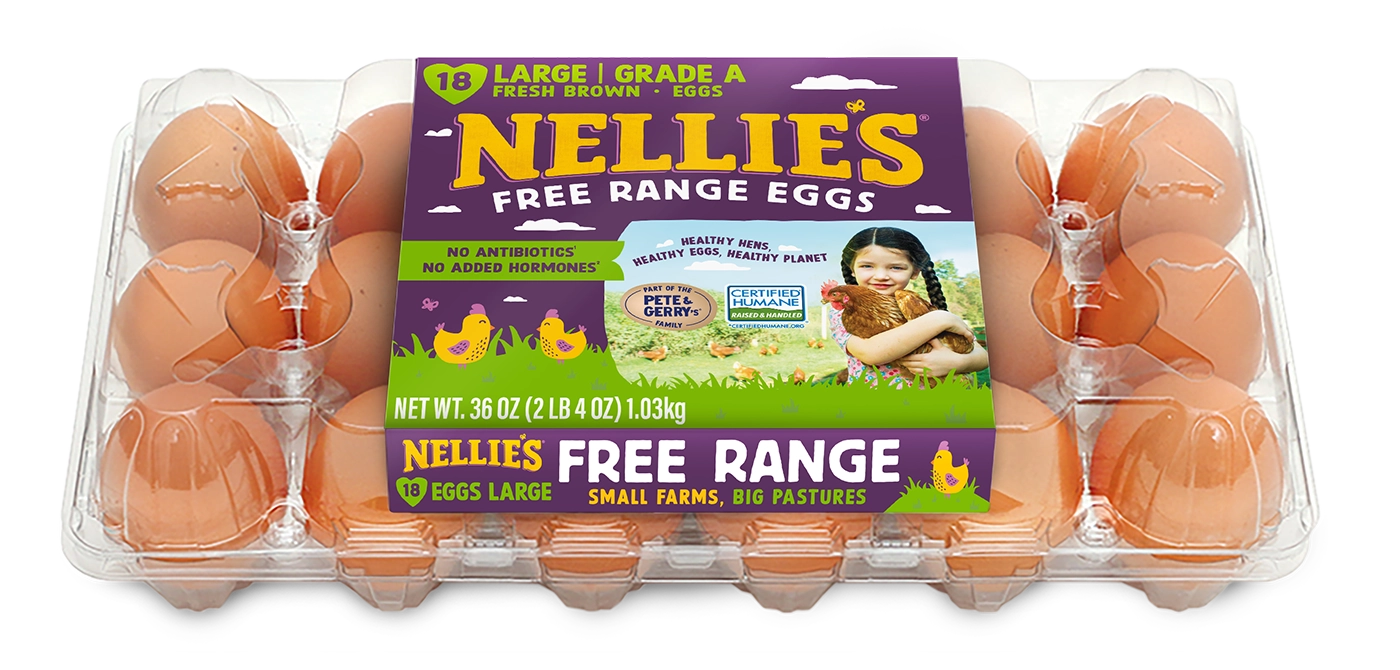
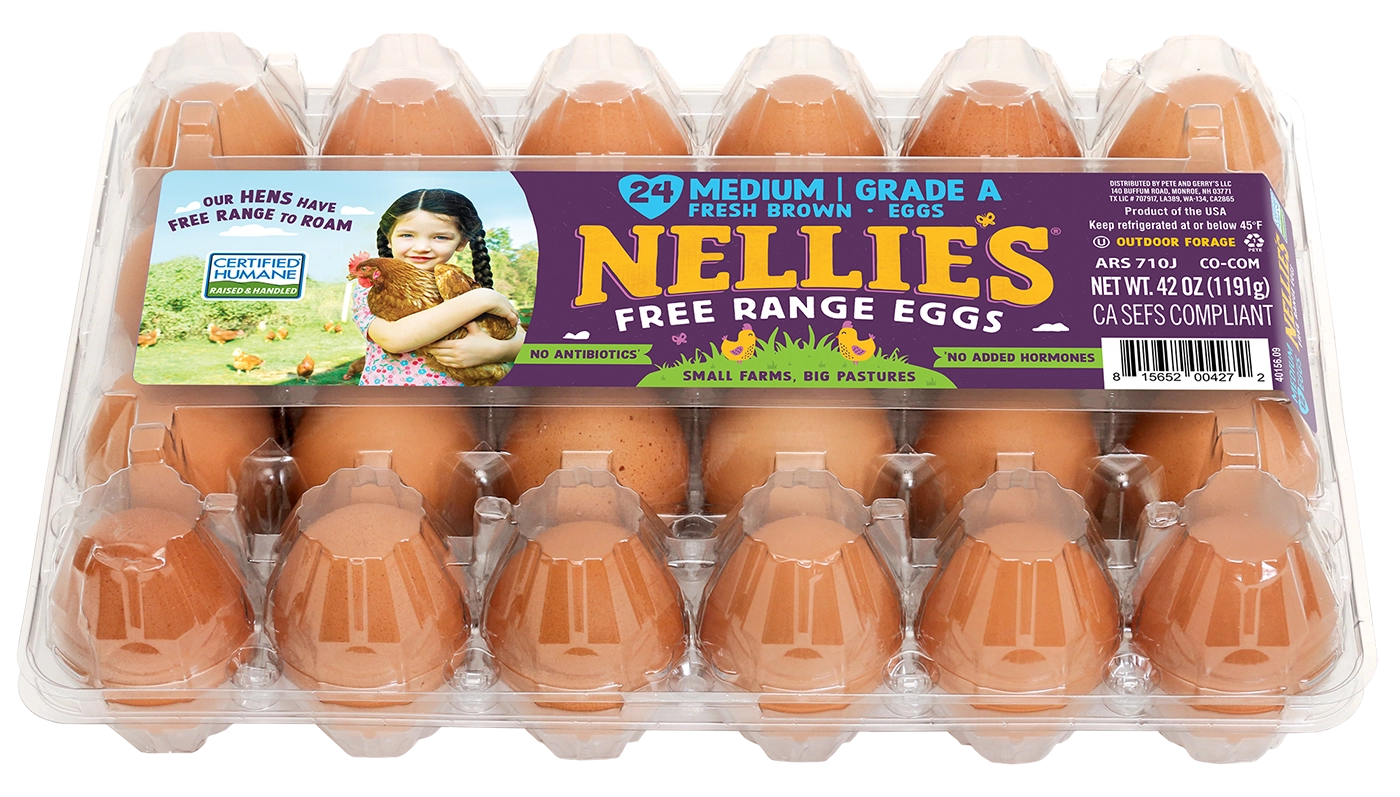
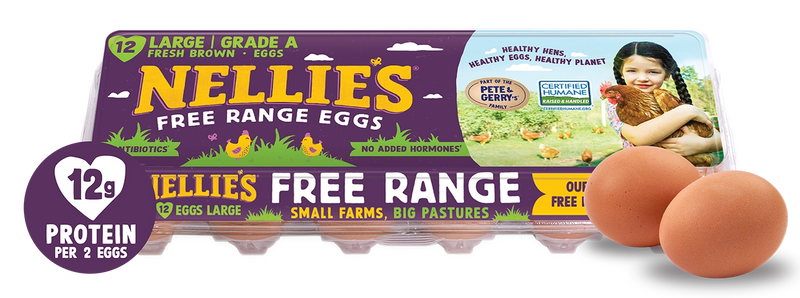
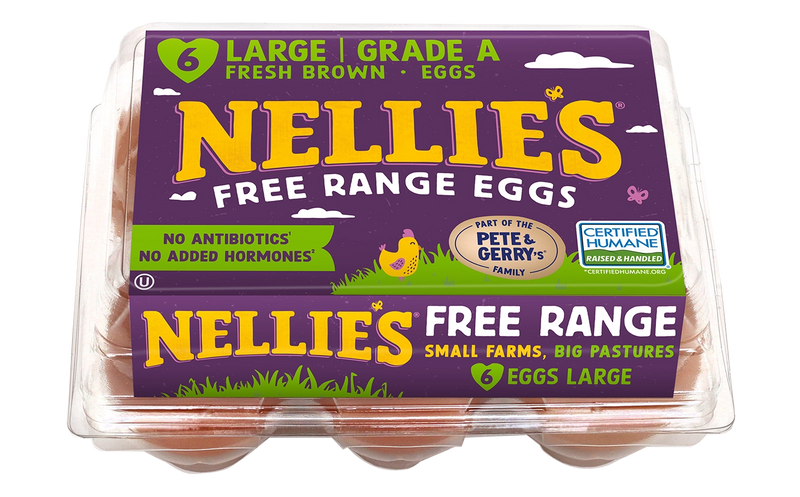
It would come as no surprise if our hens laid heart-shaped eggs; that’s how much kindness and care goes into each and every purple carton. So what does all Nellie’s fun, foraging, and gabbing with her gals mean for you? Better, yummier eggs that taste like pure love no matter how you prepare them.

Available sizes: M, L, XL, Jumbo

Quantity

Find In Stores

  • 6g

    Protein

  • 70

    Omega 3

  • 70

    Calories

  • 0g

    Carbs

6 Reasons to Eat Eggs Daily

Nutrition Facts

Serving Size:

1 Large Egg (50g)

Calories 70
Total Fat 5g
Saturated Fat 1.5g
Trans Fat 0
Cholesterol 185mg
Sodium 70mg
Total Carb. 0g
Dietary Fiber 0g
Total Sugars 0g
Protein 6g
Decorative illustration

Why Nellie's?

No antibiotics or hormones

No antibiotics or hormones

No one wants “gunk” in their eggs, and that includes Nellie! Our hens are never treated with antibiotics or given hormones. Thanks to their airy, uncrowded, clean, and safe living conditions, preventive measures often found on caged and cage-free factory farms have no place on Nellie's Free-Range farms—or in your food.

A healthy, sustainable protein

A healthy, sustainable protein

Did you know that eggs are nature’s perfect protein? The 6 grams of protein found in a Nellie’s Free-Range Egg are made up of all nine essential amino acids that are vital to our health, making them a complete source of protein. Eggs are considered nutrient-dense; for good reason, they're packed with 12 other essential vitamins and nutrients for a mere 70 calories. On top of all that, eggs are an incredibly affordable and earth-friendly vegetarian source of protein that everyone can enjoy.

Raised on family farms with big pastures

Raised on family farms with big pastures

Unlike cage-free hens, Nellie and her free-range friends have access to green, grassy pastures where they can do what they do best: just be hens. Working with independent family farms ensures our flocks receive the hands-on, round-the-clock care they deserve. But don’t worry; big pastures give our gals plenty of alone time to cluck about the latest farm gossip without an audience.

B Corporation Certified

B Corporation Certified

As part of the Pete & Gerry's family of brands, Nellie's Free Range became the first egg producer in the country to achieve Certified B Corporation status in 2013, solidifying our dedication to using business as a force for good through our balanced commitment to people, planet, and profit in all that we do—and of course, taking a cue from our hen friends by leading with kindness and curiosity at every turn.

Test Your Eggspertise

Are hens omnivores or herbivores?

Omnivores! Free-range hens enjoy a diverse diet of greens and pasture grubs.

Decorative illustration

FAQs

Where can I buy Nellie's Free Range Eggs?

We're proud to say that our eggs are sold in grocery stores, supermarkets, health food stores, and other locations nationwide. Check out the store locator page to find a market near you!

I can't find your eggs in my favorite store. What do I do?

Great question! We find that store managers are eager to carry products that their customers request, so we suggest letting your store manager know that you'd like to see our eggs at your store. You can also drop us a line at familyfarmteam@peteandgerrys.com and we’re happy to see what we can do to help.

Do you give your hens hormones?

We do not give our Nellie's hens hormones. In fact, it is illegal for anyone raising poultry to administer hormones.

Do you give your hens antibiotics?

Nellie's Free Range Farms are committed to Animal Welfare and believe in raising our hens in compliance with Humane Farm Animal Care (HFAC) Certification Standards (Certified Humane).  Our farms undergo 3rd party inspection to ensure requirements such as feed, veterinary care, housing, and outdoor access meet the Certified Humane criteria.  This means we do not give our hens antibiotics in their feed or water as a mass preventive measure and instead focus on raising our hens in a clean and healthy environment.

What does Free-Range mean?

Each of our partner farms follows the Certified Humane Free-Range standards, which means that during most times of the day and year, our hens are free to roam outside as they please with a minimum of 2 square feet per hen of pasture. It is very rare for the entire flock to choose to be outside at any one time during the day - many of them prefer shade, water, feed, or social opportunities inside the barn - so the girls that feel like venturing out usually have a vast expanse of a field all to themselves to explore.

What is the difference between Free-Range and Cage-Free?

Check out Our Farms for more differences and details of our farm standards. Despite the name, Cage-Free is still caged – gigantic floor-to-ceiling metal enclosures full of layers, catwalks, and doors – with hens that do not get to see the sun. Free Range hens get to forage and roam freely outside as they please, in pastures that keep them happy and healthy. At Nellie’s Free Range, we care deeply about hen welfare and humane farming practices, believing that every hen should get to see the sun!

What is Certified Humane?

Certified Humane is a nonprofit organization dedicated to improving the quality of life of farm animals, ensuring the humane and responsible treatment of our beloved hens. We invite you to view their standards and find their specific guidelines for egg laying hens.

Is your packaging recyclable?

Yes! Our rPET cartons are both made with recycled plastic and are recyclable as a #1 plastic type.

How much protein is in an egg?

Each large egg contains around 6 grams of protein; Jumbo eggs are about 8 grams of protein. Eggs are considered a complete protein, meaning they contain each of the nine amino acids.

Why are Nellie's eggs brown?

Eggshell color is all about the ears! Or, earlobes. Egg shell color is determined by the breed of hen and is often related to the color of the feathers over the hen’s earlobes. Brown hens, like those on our farms, typically lay brown eggs, and white chickens lay white eggs (although there are a few breeds of white chickens with brown ear feathers that lay brown eggs). However, it's important to note that shell color has nothing to do with the nutritional content or quality of an egg.